
Insights
How to Build an Employee Performance Management System for Small and Medium Businesses
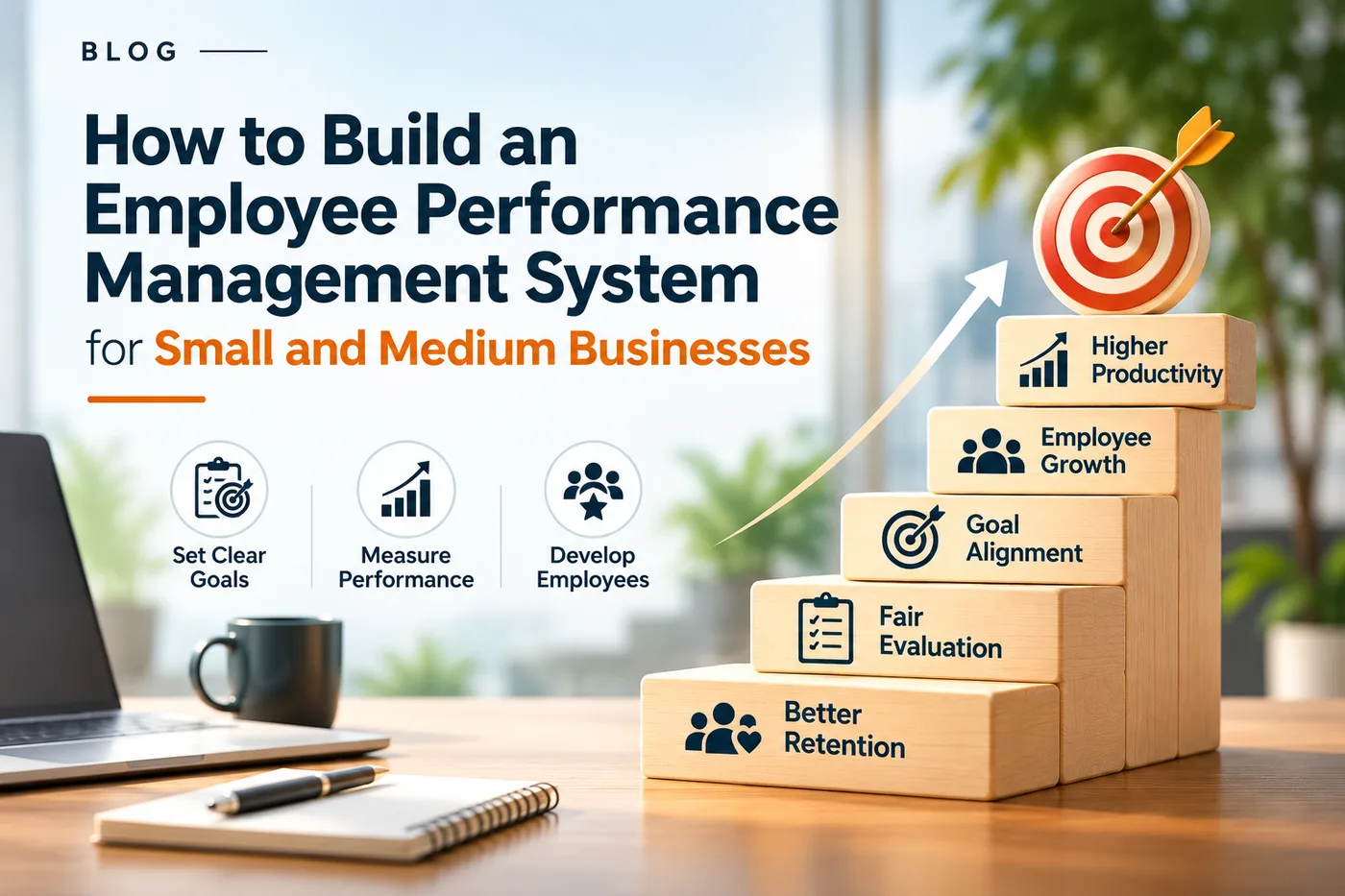
An employee performance management system helps an organisation set expectations, support employees, review progress and connect individual contributions with business goals. For small and medium businesses, a practical system does not need to be complicated. It should make priorities clear, encourage useful feedback and help managers identify the support employees need to perform well. A consistent approach can also reduce confusion caused by informal or irregular evaluations.
What Is an Employee Performance Management System?
Performance management is an ongoing process—not just an annual appraisal. It typically includes setting goals, agreeing on measures, checking progress, providing feedback, reviewing results and planning development. The system should be appropriate to the organisation’s size and culture. A simple process that managers use consistently is usually more helpful than a complex framework that is difficult to maintain.
Why Do SMEs Need Performance Management?
As teams grow, employees may receive different messages about priorities and success. A shared framework helps clarify responsibilities, identify capability gaps and support fairer conversations. It can also help leaders connect business objectives with team and individual goals. Performance management should focus on improvement and accountability, not only on ranking employees.
Step 1: Align Goals With Business Priorities
Start by identifying a small number of business priorities for the review period. Translate them into team outcomes and then into individual goals. Each employee should understand what they own, why it matters and how progress will be assessed. Goals should be realistic, relevant and within the employee’s influence. Managers should revisit them when business conditions change.
Step 2: Choose Meaningful KPIs and Measures
Key performance indicators (KPIs) help track progress against defined outcomes. Choose measures that reflect quality as well as quantity. For example, a customer support role may consider response time, resolution quality and customer feedback rather than ticket volume alone. A recruitment role may track time-to-fill alongside candidate quality and hiring-manager feedback. Avoid metrics that encourage shortcuts or behaviour that conflicts with company values.
KPIs vs OKRs: What Is the Difference?
KPIs are commonly used to monitor ongoing performance or operational health. Objectives and Key Results (OKRs) are a goal-setting approach that connects an objective with measurable results to be achieved within a period. Organisations may use both: KPIs to monitor stable operations and OKRs to focus teams on a specific improvement or change. Select a framework based on the business need, not because it is fashionable.
Step 3: Establish Regular Feedback and Check-Ins
Short, regular check-ins help managers address blockers before they become larger problems. Discuss progress, workload, support needed and next steps. Feedback should be specific, timely and respectful. Employees should also have an opportunity to share context and raise concerns. Record key actions without turning every conversation into excessive paperwork.
Step 4: Conduct Fair Performance Reviews
A review should consider agreed goals, evidence, work quality, collaboration and relevant circumstances. Managers should use consistent criteria across comparable roles and avoid relying only on recent events or personal impressions. Employees should be able to respond, discuss development goals and understand the next steps. Calibration or manager training can help improve consistency across teams.
Step 5: Connect Reviews to Employee Development
Performance conversations are more useful when they lead to action. Identify skills to strengthen, coaching opportunities, learning resources or changes to role expectations. Agree on a development plan with practical milestones and follow up. Performance outcomes may inform other decisions, but organisations should communicate how reviews relate to pay, promotion or other processes rather than leaving employees to guess.
Common Challenges and How to Avoid Them
Challenges include unclear goals, too many metrics, inconsistent manager capability, infrequent feedback and a process that feels punitive. Keep the framework proportionate, train managers, explain the purpose and invite feedback on the system itself. Review whether measures encourage the right behaviours and make adjustments when they do not.
Improve Employee Performance with Strategic HR Support
Building a high-performing team starts with clear goals, effective performance evaluation and continuous employee development.
At Meptor, we help businesses strengthen their HR strategies through performance management, strategic HR planning, employee development and structured people-management solutions.
Take the next step towards building a more productive and accountable workforce.
Frequently Asked Questions
How often should performance reviews happen?
Many businesses use periodic formal reviews supported by regular check-ins. The appropriate cadence depends on role, business cycle and organisational needs.
What is a good performance management system for a small business?
A clear goal-setting process, a few meaningful measures, recurring feedback and documented development actions can provide a strong starting point.
Are KPIs better than OKRs?
They serve different purposes. KPIs monitor performance; OKRs focus attention on objectives and measurable outcomes. Some organisations use both.
Can HR consultants help implement performance management?
HR consultants may support framework design, manager guidance, goal-setting processes and review documentation, while leaders remain accountable for performance decisions.

