Insights
How Professional HR Support Can Reduce Administrative Work
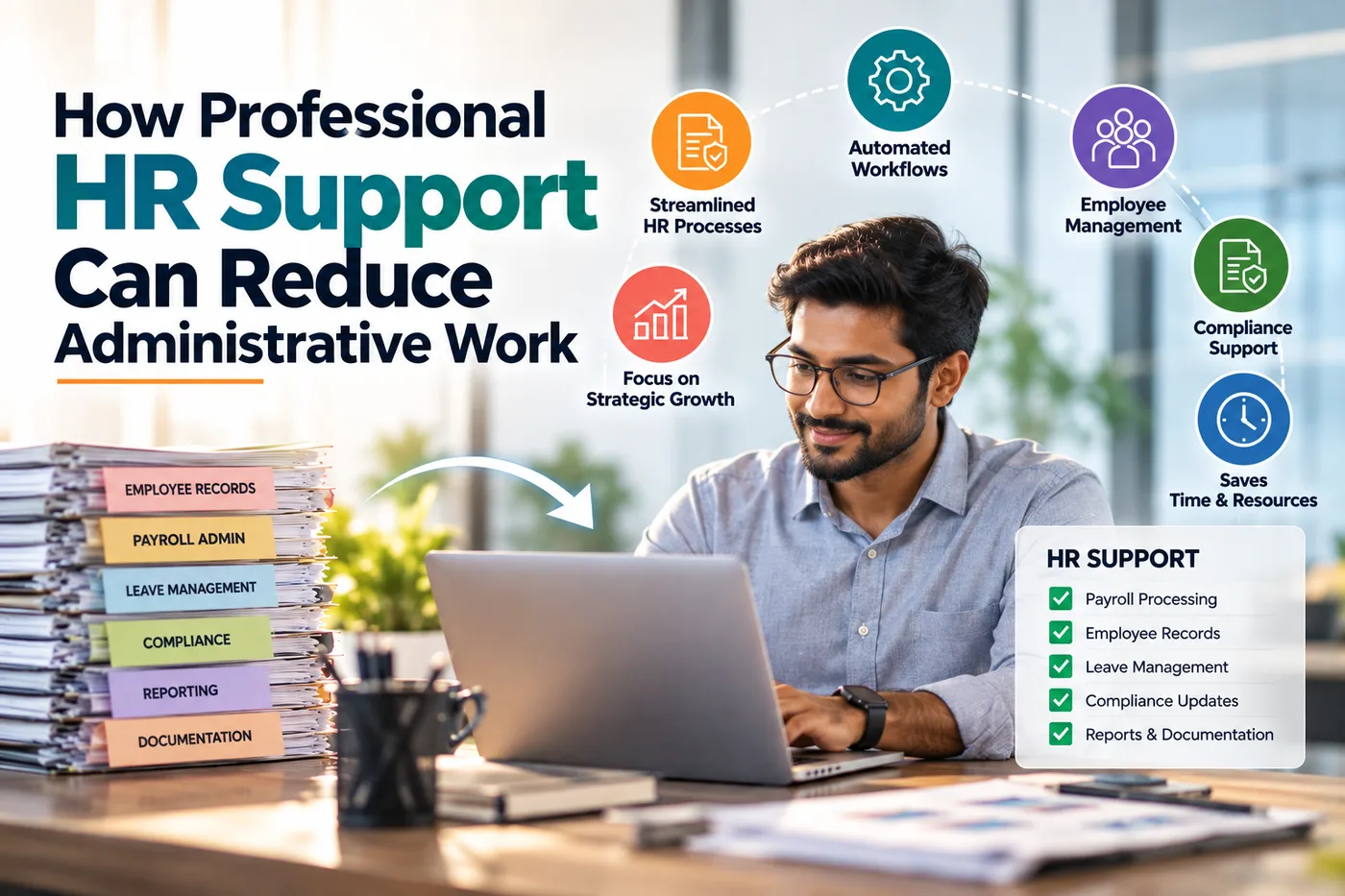
HR administration is an essential part of running a business, but it can quickly become time-consuming as an organization grows. Managing employee records, recruitment documentation, onboarding, payroll coordination, leave records, HR policies, and routine employee requests can take significant time away from business owners, managers, and internal HR teams.
Professional HR support can help businesses organize these responsibilities through structured processes, specialized expertise, and appropriate technology. Instead of managing every HR activity manually, businesses can receive support with specific functions or outsource selected HR responsibilities based on their operational requirements.
What Is HR Administrative Work?
HR administrative work includes the routine activities required to manage employees and maintain organized workforce processes.
Common examples include:
- Maintaining employee records
- Preparing HR documentation
- Managing onboarding paperwork
- Coordinating recruitment activities
- Maintaining leave and attendance information
- Supporting payroll processes
- Updating HR policies
- Managing employee documentation
- Preparing HR reports
- Responding to routine employee queries
While these activities may appear manageable for a small team, the workload can increase significantly as the number of employees grows.
How Professional HR Support Reduces Administrative Work
1. Organizes Employee Records
Employee information needs to be accurate, accessible, and properly maintained throughout the employee lifecycle.
Professional HR support can help businesses establish standardized processes for collecting, updating, organizing, and maintaining employee records. This reduces the need for employees and managers to repeatedly search for information or maintain separate records.
Organized employee information can also make routine HR tasks easier to manage.
2. Streamlines Employee Onboarding
Onboarding involves several administrative activities, including collecting employee information, preparing documentation, coordinating introductions, arranging system access, and communicating initial requirements.
An HR support provider can create standardized onboarding workflows and checklists so that important steps are not overlooked.
This allows internal teams to spend less time coordinating routine onboarding tasks while giving new employees a more consistent experience.
3. Simplifies Recruitment Administration
Recruitment can generate a substantial amount of administrative work, particularly when a business is hiring multiple employees.
HR support can assist with activities such as job posting coordination, candidate screening, interview scheduling, candidate communication, and recruitment documentation.
A structured recruitment workflow can reduce repetitive administrative tasks and help hiring managers focus on evaluating candidates and making hiring decisions.
4. Supports Payroll Administration
Payroll requires accurate employee information and timely coordination between HR, finance, and management.
Professional payroll support can help businesses organize payroll-related information, coordinate employee changes, maintain records, and support payroll processing.
This can reduce the amount of routine payroll administration handled internally while helping create a more consistent process.
5. Standardizes HR Processes
Administrative work often increases when there is no standardized process.
For example, if every new employee is onboarded differently, HR teams may spend additional time determining what documents are required, who needs to approve them, and what steps need to be completed.
Professional HR support can help businesses establish repeatable workflows for common HR activities. Standardization can make routine processes easier to manage and scale.
6. Reduces Manual Documentation
Repeatedly creating documents, updating spreadsheets, and collecting the same information can consume valuable time.
HR support combined with appropriate digital tools can help businesses reduce unnecessary manual work. Depending on the organization's requirements, digital workflows can be used for employee records, onboarding, leave management, recruitment, and other HR activities.
The goal should be to simplify processes without compromising accuracy or appropriate data controls.
7. Helps Manage HR Policies and Documentation
Businesses may need various HR policies, procedures, forms, and employee documents.
Keeping these documents organized and up to date can become an administrative responsibility of its own. HR professionals can help businesses review their documentation, organize policies, and establish processes for maintaining relevant records.
Businesses should ensure that policies and procedures are appropriate for their jurisdiction and specific employment circumstances.
8. Handles Routine HR Queries
Managers and employees often have questions about leave, policies, documentation, onboarding, payroll processes, and other HR matters.
Professional HR support can provide an organized channel for handling routine HR queries. This can reduce the number of administrative interruptions experienced by business owners and managers.
It also gives employees a clearer process for obtaining HR-related information.
9. Supports Compliance Administration
HR compliance can involve documentation, policies, records, and recurring administrative processes. Requirements vary depending on the location, industry, and workforce structure.
Professional HR support can help businesses organize these processes and maintain appropriate documentation. Businesses should ensure that their HR provider has relevant knowledge of the employment requirements applicable to their operations.
10. Gives Business Leaders More Time for Strategic Work
Perhaps the most significant benefit of reducing HR administration is the time it creates for higher-value activities.
Instead of spending hours managing routine employee documentation and administrative tasks, business leaders and internal teams can focus on areas such as:
- Business development
- Workforce planning
- Employee development
- Customer relationships
- Operational improvements
- Strategic decision-making
Professional HR support does not eliminate the need for internal management. Instead, it can help ensure that routine HR responsibilities are handled through clearer and more efficient processes.
When Should a Business Consider Professional HR Support?
Businesses may consider professional HR support when:
- HR administration is taking too much internal time
- Employee numbers are increasing
- Recruitment activity is growing
- Payroll is becoming more complex
- HR documentation is difficult to maintain
- Managers are handling too many routine HR queries
- The business is expanding into new locations
- There is no dedicated internal HR team
The appropriate level of support depends on the organization's size, industry, workforce, internal capabilities, and HR requirements.
propriate model depends on the organization's needs.
Reduce HR Administrative Work With Meptor
Efficient HR management requires more than completing individual administrative tasks. Businesses need structured processes that make employee management easier to organize as the workforce grows.
Meptor provides HR consultancy and business solutions covering recruitment, employee onboarding, payroll management, HR administration, and workforce support. Our services can help businesses organize routine HR responsibilities and develop processes that support their operational requirements.
If your team is spending too much time on HR administration, explore Meptor's HR consultancy solutions to identify opportunities to simplify and streamline your HR operations.