Insights
How to Build an Effective Recruitment Strategy for Your Business
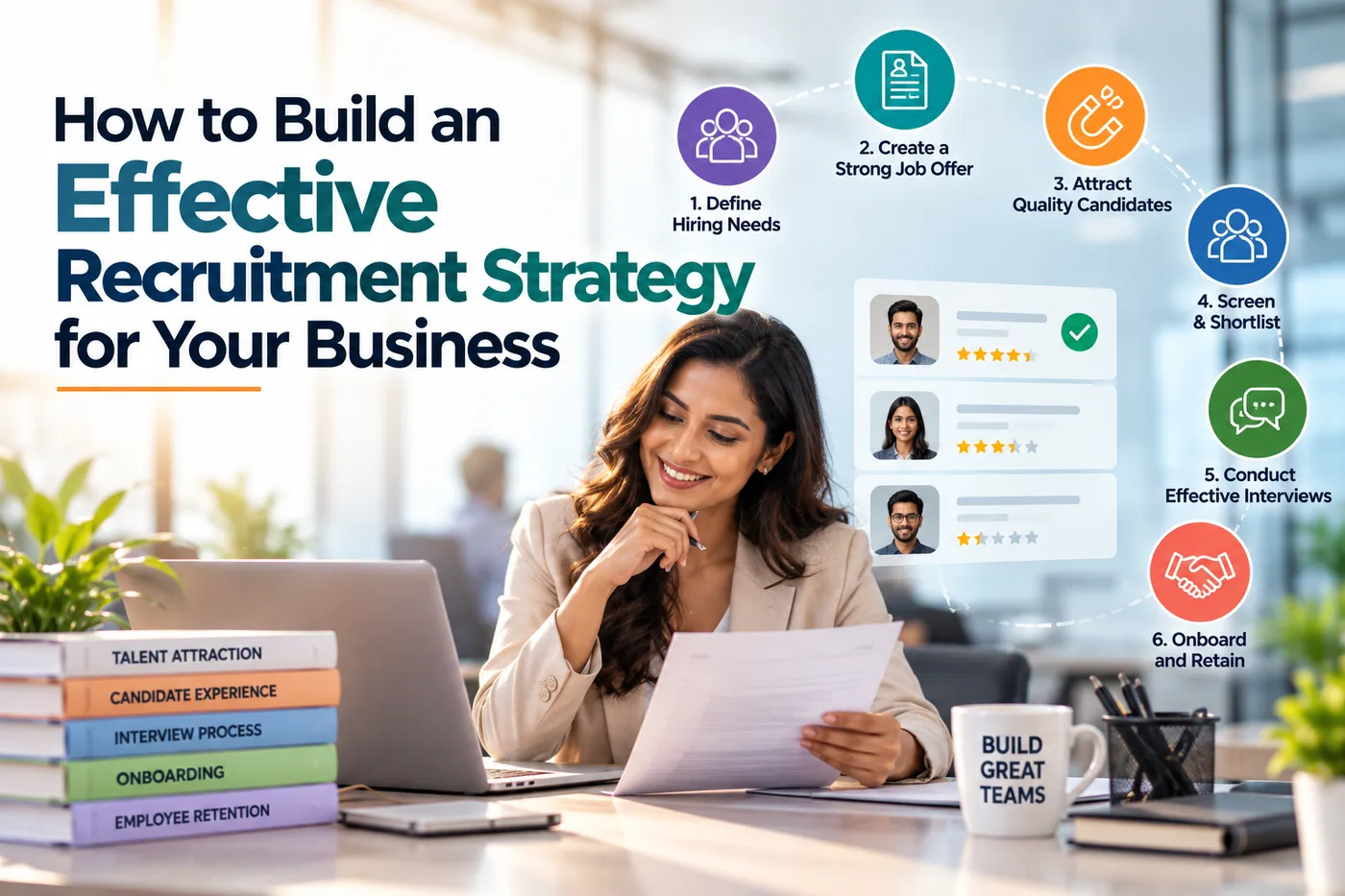
Recruiting the right people is an important part of building a productive and sustainable business. However, successful recruitment involves more than publishing job vacancies and interviewing candidates. Businesses need a structured recruitment strategy that connects workforce requirements, candidate sourcing, screening, interviews, hiring, and onboarding with their broader business objectives.
An effective recruitment strategy helps organizations identify the talent they need, reach suitable candidates, create a consistent hiring process, and make informed recruitment decisions. Whether you are a startup hiring your first employees or an established company expanding its workforce, a well-planned recruitment process can make hiring more organized and scalable.
Here are the key steps to building an effective recruitment strategy for your business.
1. Understand Your Workforce Requirements
The first step in recruitment planning is understanding why you need to hire.
Start by identifying current workforce gaps, upcoming business requirements, new projects, expected growth, and skills that are missing from your existing team. Avoid hiring simply because a position becomes available. Instead, connect each recruitment requirement to a specific business need.
Consider:
- What role needs to be filled?
- What skills are required?
- Is the position permanent, temporary, or project-based?
- What level of experience is appropriate?
- When does the business need the employee to start?
A clear workforce requirement creates a stronger foundation for the rest of the recruitment process.
2. Create Clear and Accurate Job Descriptions
A job description is often a candidate's first detailed introduction to a position. A vague or poorly structured description can attract unsuitable applications and make the screening process more difficult.
An effective job description should clearly communicate:
- Job title
- Key responsibilities
- Required qualifications
- Required skills
- Experience level
- Work location
- Employment type
- Reporting structure
- Expected responsibilities
- Relevant benefits or opportunities
Separate essential requirements from preferred qualifications. This can help prevent businesses from unnecessarily excluding candidates who may have the right capabilities but do not meet every desirable criterion.
3. Define Your Ideal Candidate Profile
Before sourcing candidates, establish what a suitable candidate looks like for the role.
The ideal candidate profile should include the technical skills, experience, qualifications, behavioral competencies, and other characteristics genuinely required to perform the job.
However, businesses should avoid creating overly restrictive profiles. Requiring qualifications or experience that are not actually necessary can reduce the available talent pool.
A well-defined candidate profile also gives recruiters and hiring managers a consistent framework for evaluating applicants.
4. Choose the Right Candidate Sourcing Channels
Different roles require different recruitment channels. Businesses should identify where their target candidates are most likely to search for opportunities.
Potential recruitment channels include:
- Job portals
- Professional networking platforms
- Employee referrals
- Recruitment agencies
- Industry-specific communities
- Company careers pages
- Professional networks
- Direct candidate outreach
Using multiple channels can expand candidate reach, but the focus should remain on the quality and relevance of applicants rather than simply generating a large number of applications.
5. Build a Consistent Screening Process
Candidate screening helps businesses identify applicants who meet the essential requirements before moving them to interviews.
Create clear screening criteria based on the job requirements. This could include qualifications, relevant experience, technical skills, location, availability, or other legitimate role-related factors.
A standardized screening process can make recruitment more efficient and provide hiring teams with a consistent basis for evaluating candidates.
6. Structure the Interview Process
An unstructured interview process can make candidate comparisons difficult. A structured approach helps interviewers focus on the skills and competencies relevant to the position.
Before interviews begin, define:
- Who will conduct the interview
- What areas will be assessed
- Which questions will be asked
- How responses will be evaluated
- What additional assessments are required
- How final hiring decisions will be made
Using consistent, job-related questions can also make the recruitment process easier to manage and document.
7. Improve the Candidate Experience
Recruitment is a two-way process. Candidates are also evaluating your company during the hiring journey.
Clear communication can significantly improve the candidate experience. Keep applicants informed about interview schedules, next steps, expected timelines, and hiring decisions wherever possible.
A professional candidate experience can also strengthen your employer reputation, particularly when applicants share their experiences with others.
8. Use Technology to Organize Recruitment
Recruitment technology can help businesses manage candidate information, applications, interviews, communication, and recruitment reporting.
Depending on the organization's requirements, businesses may use applicant tracking systems, recruitment platforms, interview scheduling tools, digital assessments, and other HR technologies.
Technology should support a well-designed recruitment process rather than replace thoughtful decision-making. Businesses should select tools based on their actual recruitment volume, workflow, and operational requirements.
9. Measure Recruitment Performance
A recruitment strategy should be measurable. Tracking relevant recruitment metrics can help businesses understand what is working and where improvements may be needed.
Useful metrics can include:
- Time to hire
- Time to fill
- Number of qualified applicants
- Source of hire
- Interview-to-hire ratio
- Offer acceptance rate
- Recruitment cost
- New-hire retention
These measurements can help organizations identify recruitment bottlenecks and improve future hiring decisions.
10. Connect Recruitment With Employee Onboarding
Recruitment should not end when a candidate accepts an offer. The transition from hiring to onboarding is an important part of the overall employee experience.
Prepare documentation, access requirements, orientation, training, role expectations, and other onboarding activities before the employee's first day.
A connected recruitment and onboarding process helps new employees transition into the organization more smoothly and gives them a clearer understanding of their role.
Common Recruitment Strategy Mistakes to Avoid
Even businesses with established recruitment processes can encounter challenges. Common mistakes include:
- Hiring without clearly defining the role
- Using overly broad or restrictive job descriptions
- Relying on only one sourcing channel
- Delaying communication with candidates
- Using inconsistent interview criteria
- Failing to track recruitment performance
- Ignoring the candidate experience
- Treating onboarding as separate from recruitment
Regularly reviewing the recruitment process can help businesses identify these gaps and improve hiring efficiency.
When Should a Business Consider Recruitment Consultancy Services?
Managing recruitment internally can become challenging when a business has frequent hiring requirements, limited internal HR resources, specialized positions, or plans for rapid workforce expansion.
A recruitment consultancy can provide additional support with candidate sourcing, screening, recruitment coordination, talent acquisition, and other stages of the hiring process.
The right approach depends on the organization's size, hiring volume, internal capabilities, industry, and workforce requirements.
Build a More Effective Recruitment Strategy With Meptor
A successful recruitment strategy starts with understanding your workforce requirements and continues through sourcing, screening, interviewing, hiring, and onboarding. Creating a structured process can help businesses manage recruitment more consistently while supporting long-term workforce growth.
Meptor provides recruitment consultancy and HR solutions designed to support businesses with their workforce requirements. From talent acquisition and candidate sourcing to employee onboarding and broader HR support, our services can be tailored to the needs of growing organizations.
If your business needs professional recruitment support, explore Meptor's recruitment consultancy services and discover how a structured hiring approach can support your business operations.