Insights
How to Choose the Right HR Consultancy for Your Business
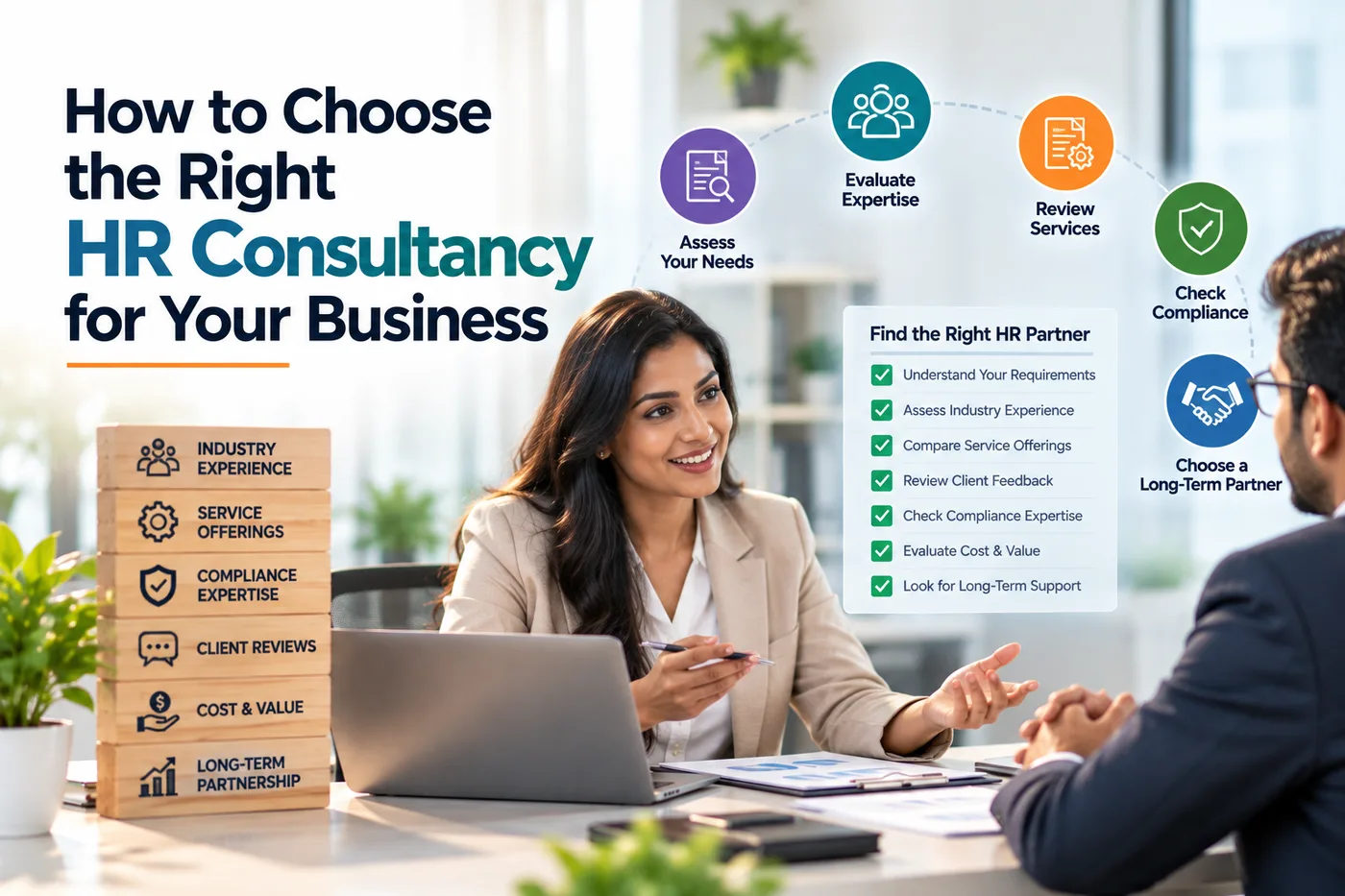
Choosing the right HR consultancy can have a direct impact on how efficiently your business manages recruitment, employees, payroll, compliance, and workforce planning. As businesses grow, handling every HR responsibility internally can become time-consuming and difficult to scale. An experienced HR consultancy can provide specialized support while helping businesses establish more structured and efficient HR processes.
However, not every HR consultancy offers the same services, expertise, or approach. The right choice depends on your business size, industry, workforce requirements, operating locations, and specific HR challenges.
Here are the key factors to consider when choosing an HR consultancy for your business.
1. Identify Your HR Requirements First
Before contacting an HR consultancy, identify the areas where your business needs support.
Your requirements could include:
- Recruitment and talent acquisition
- Employee onboarding
- Payroll management
- HR administration
- HR policies and documentation
- Compliance support
- Workforce planning
- Employee management
- Training and development
Some businesses may only need payroll or recruitment support, while others may require broader HR consultancy services. Understanding your priorities first makes it easier to compare providers and find a service model that fits your organization.
2. Look for Relevant Industry Experience
HR requirements can differ significantly between industries. A consultancy that understands your industry may be better positioned to recognize common workforce challenges and design processes relevant to your business environment.
When evaluating an HR consultancy, look at its experience with businesses similar to yours. Consider the industries it serves, the types of organizations it works with, and whether its team has experience dealing with workforce requirements similar to yours.
Relevant experience can be particularly important for businesses operating in specialized or highly regulated industries.
3. Evaluate the Range of HR Services
Think beyond your immediate HR problem and consider what your business may need as it grows.
For example, you may initially be looking for recruitment support, but future requirements could include employee onboarding, payroll management, HR policies, or workforce planning.
A consultancy offering multiple HR services can potentially provide continuity as your requirements evolve. However, the number of services offered should not be the only consideration. Focus on whether the consultancy has the expertise and resources to deliver the specific services your business requires.
4. Check the Consultancy's Approach to Recruitment
If recruitment is one of your priorities, understand how the consultancy manages the hiring process.
Ask how candidates are sourced, screened, evaluated, and presented to your organization. You can also ask about communication, interview coordination, candidate documentation, and the expected recruitment workflow.
A structured recruitment process can help businesses manage hiring more efficiently while keeping decision-making with the employer.
5. Assess Their HR Compliance Knowledge
HR compliance is an important consideration when selecting an HR consultancy. Employment requirements can vary depending on the country, state, industry, and workforce structure.
Ask potential providers how they stay informed about applicable requirements and how they support clients with HR documentation, policies, and compliance processes.
If your business operates across multiple locations, local knowledge becomes especially important because HR requirements may differ between jurisdictions.
6. Consider Technology and Process Management
Modern HR consultancy is not only about advice. Many HR processes can be improved through technology and standardized workflows.
Ask whether the consultancy uses digital systems or tools for areas such as:
- Employee records
- Recruitment
- Payroll
- Onboarding
- Documentation
- HR reporting
Technology should support the process rather than make it unnecessarily complicated. The objective should be to improve efficiency, visibility, accuracy, and communication.
7. Review Communication and Responsiveness
A consultancy may have strong technical knowledge, but communication is equally important.
Before signing an agreement, understand how communication will work. Ask who your primary contact will be, how quickly queries are normally addressed, and how regularly the consultancy provides updates.
Clear communication helps prevent misunderstandings and makes it easier for your internal team and external HR partner to work together.
8. Understand the Pricing Structure
Cost should be considered alongside the scope and quality of service.
HR consultancies may use different pricing models depending on the services provided. Some may charge fixed fees for specific services, while others may use monthly retainers, project-based pricing, or customized packages.
Before making a decision, request a clear breakdown of what is included. Ask about additional charges, service limits, contract terms, and any costs associated with expanding the scope of work.
The goal should be to understand the overall value and suitability of the service rather than choosing a provider based solely on the lowest price.
9. Ask About Reporting and Performance Measurement
A professional HR consultancy should be able to explain how its work will be monitored.
Depending on the services you use, relevant measurements could include recruitment timelines, hiring activity, payroll accuracy, onboarding completion, employee documentation, or other agreed HR indicators.
Before starting the engagement, discuss what information you will receive and how progress will be communicated.
10. Check References, Case Studies, and Client Experience
Before making a final decision, research the consultancy's previous work where information is available.
Look for relevant case studies, client testimonials, service examples, and evidence of experience with businesses similar to yours. If appropriate, ask the consultancy to explain how it has handled challenges comparable to yours.
This can help you understand not just what services the consultancy offers, but how those services are delivered in real business situations.
Questions to Ask Before Hiring an HR Consultancy
Before choosing a provider, consider asking:
What HR services do you specialize in?
Understanding the consultancy's core capabilities helps determine whether it can address your most important requirements.
Do you have experience working with businesses like ours?
Relevant experience can provide useful context about the consultancy's familiarity with your industry and workforce structure.
How do you handle communication and reporting?
Clarify your main point of contact, reporting frequency, and communication process.
Can your services scale with our business?
Your HR requirements may change as your organization grows, so scalability should be part of the conversation.
What is included in the pricing?
Request clear information about deliverables, exclusions, additional charges, and contract terms.
Choosing an HR Consultancy That Fits Your Business
The right HR consultancy is not necessarily the one offering the largest number of services or the lowest price. It is the provider whose experience, services, processes, communication, and approach align with your organization's actual requirements.
Start by identifying your HR challenges, define the services you need, compare relevant providers, and ask detailed questions before entering into an agreement. A structured evaluation process can help you select an HR partner that can support both your current workforce requirements and future business growth.
How Meptor Can Support Your HR Requirements
Meptor provides professional HR consultancy and business solutions covering areas such as recruitment, employee onboarding, payroll management, HR administration, and workforce support.
Our approach focuses on understanding business requirements and providing practical HR solutions that can adapt as organizations grow.
If your business is looking for professional HR support, explore Meptor's HR consultancy services to understand how our solutions can support your workforce and business operations.